LAS VEGAS AC GUIDE
What Is BTU? Free Simple Guide for Homeowners Choosing an AC
By Robert Wilson, Vegas AC Repair
BTU stands for British thermal unit. One BTU is the amount of heat needed to raise the temperature of one pound of water by one degree Fahrenheit. In heating and cooling, BTU per hour tells you how much heat a system can remove from your home (for an AC) or add to it (for a furnace or heat pump) in one hour.
That is why AC and furnace labels list numbers like 24,000 or 60,000. A higher number means more capacity, but more is not always better. The right BTU size depends on the home, not just the square footage.
What Does BTU Mean for an Air Conditioner?
For an AC, BTU per hour is cooling capacity. It is how much heat the system can pull out of your home every hour.
BTU and tons
Central AC sizes are usually listed in tons. One ton of cooling equals 12,000 BTU per hour. The term comes from the heat needed to melt one ton of ice over 24 hours.
| AC size | Cooling capacity |
|---|---|
| 1.5 tons | 18,000 BTU per hour |
| 2 tons | 24,000 BTU per hour |
| 2.5 tons | 30,000 BTU per hour |
| 3 tons | 36,000 BTU per hour |
| 3.5 tons | 42,000 BTU per hour |
| 4 tons | 48,000 BTU per hour |
| 5 tons | 60,000 BTU per hour |
Reading the model number
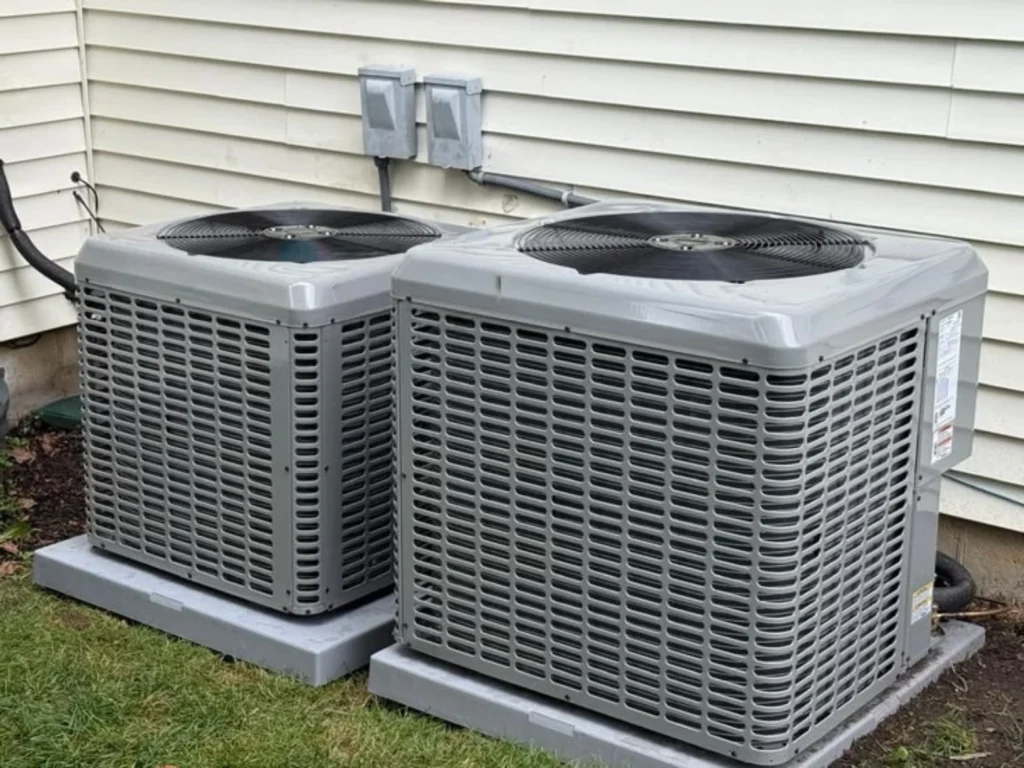
Many outdoor unit model numbers include the size in thousands of BTU. A number like 036 or 36 in the model often means 36,000 BTU per hour, or 3 tons. Brands differ, so check the spec sheet to be sure.
What Does BTU Mean for a Furnace?
For a furnace, BTU per hour describes heat. Furnace labels often list two numbers.
Input and output
Input BTU is how much fuel energy the furnace burns. Output BTU is how much heat actually reaches the house. The difference is lost through the flue. The ratio is the AFUE rating. A furnace with 80,000 BTU input and 80 percent AFUE delivers about 64,000 BTU of heat.
The U.S. Department of Energy explains AFUE and furnace efficiency in more detail.
How Many BTUs Do You Need?
You need enough to handle your home on a design day, and no more. Rules of thumb like 1 ton per 500 square feet are rough guesses. Two homes of the same size in Las Vegas can need very different systems.
What changes the BTU you need
- Insulation in the attic and walls
- Window size, type and direction
- Air leaks and duct leaks
- Ceiling height
- Number of people and appliances
- Shade from trees or nearby homes
- Local design temperatures
Why Las Vegas needs careful sizing
Summer design temperatures in the valley are well above 100 degrees. West facing windows and a hot attic can add a lot of heat. A proper load calculation accounts for all of it. Our guide on how to size a heating and air conditioning system explains the method pros use.
Is a Bigger BTU AC Better?
No. An oversized AC causes its own problems.
- It short cycles, turning on and off too often
- It removes less moisture, so the house can feel clammy
- Parts wear faster from frequent starts
- It costs more up front
See AC short cycling for what that does to a system.
And an undersized AC?
An undersized system runs nonstop on hot afternoons and may never reach the set point. On a 115 degree day, even a correct system may run constantly. That is normal. The question is whether it can hold a reasonable indoor temperature.
What About BTU for Window Units and Mini Splits?
The same idea applies. Window units often range from about 5,000 to 25,000 BTU per hour. Ductless mini split heads also come in BTU sizes, often 9,000 to 24,000 BTU per hour per zone. Our guide on what is a mini split covers how to size zones for garages and casitas.
How Does BTU Relate to Efficiency?
BTU is capacity. SEER2 and EER2 are efficiency. Two 3 ton systems both deliver about 36,000 BTU per hour, but the one with a higher SEER2 rating does it with less electricity. See what is SEER2.
A Typical Las Vegas Case: The Garage That Needed More BTU
A 450 square foot garage gym with an uninsulated door. A 12,000 BTU mini split could not keep up in July. After the door was insulated, an 18,000 BTU head held the space comfortably.
Square footage alone said 12,000 was enough. The real heat load said otherwise. That is why sizing starts with the space, not a chart.
Get the Right Size System for Your Las Vegas Home
When you get quotes for AC installation in Las Vegas, ask the installer to size the system to your home, not just to the old label. That is how you get steady comfort, lower bills and a longer system life. For a price overview, see how much a new AC unit costs. Sizing differs a lot between a small North Las Vegas single story and a large two-story home. For any system question, see AC repair in Las Vegas.
Frequently Asked Questions
What does BTU stand for?
BTU stands for British thermal unit. It is the heat needed to raise one pound of water by one degree Fahrenheit.
How many BTUs is a ton of AC?
One ton of cooling equals 12,000 BTU per hour. A 3 ton system provides about 36,000 BTU per hour.
How many BTUs do I need for a 2,000 square foot house?
It depends on insulation, windows, shade and climate. Rules of thumb give a rough range, but a load calculation is the only reliable way to size a system.
Is a higher BTU AC better?
Not always. An oversized AC short cycles, removes less moisture and wears faster. The right size matches the home’s actual heat load.
What is the difference between input and output BTU on a furnace?
Input BTU is the fuel energy the furnace burns. Output BTU is the heat delivered to the home. AFUE is the ratio between them.
How do I find the BTU of my AC?
Look at the outdoor unit model number. Many include the size in thousands of BTU, such as 036 for 36,000. Check the spec sheet to confirm.
Does BTU affect my power bill?
BTU is capacity, not efficiency. The SEER2 and EER2 ratings tell you how much electricity a system uses to deliver that capacity.
How many BTUs do I need for a garage in Las Vegas?
Garages in Las Vegas get very hot, so they often need more capacity per square foot than living space. A mini split sized by load calculation works best.
Contact Emergency Repair Service
Call now. We connect you with independent local AC service providers anywhere in the Las Vegas valley.
AC & HEATING calls · LAS VEGAS VALLEY
AC Down? Get a Straight Answer Backed by Real Numbers.
Calls answered 24 hours · Independent local AC service providers · No contracts
Call or text
(725) 300-3660, answered 24 hours a day. Same-Day service across the valley.
Where we are
3863 S Valley View Blvd, Las Vegas, NV 89103. Serving the whole valley.