
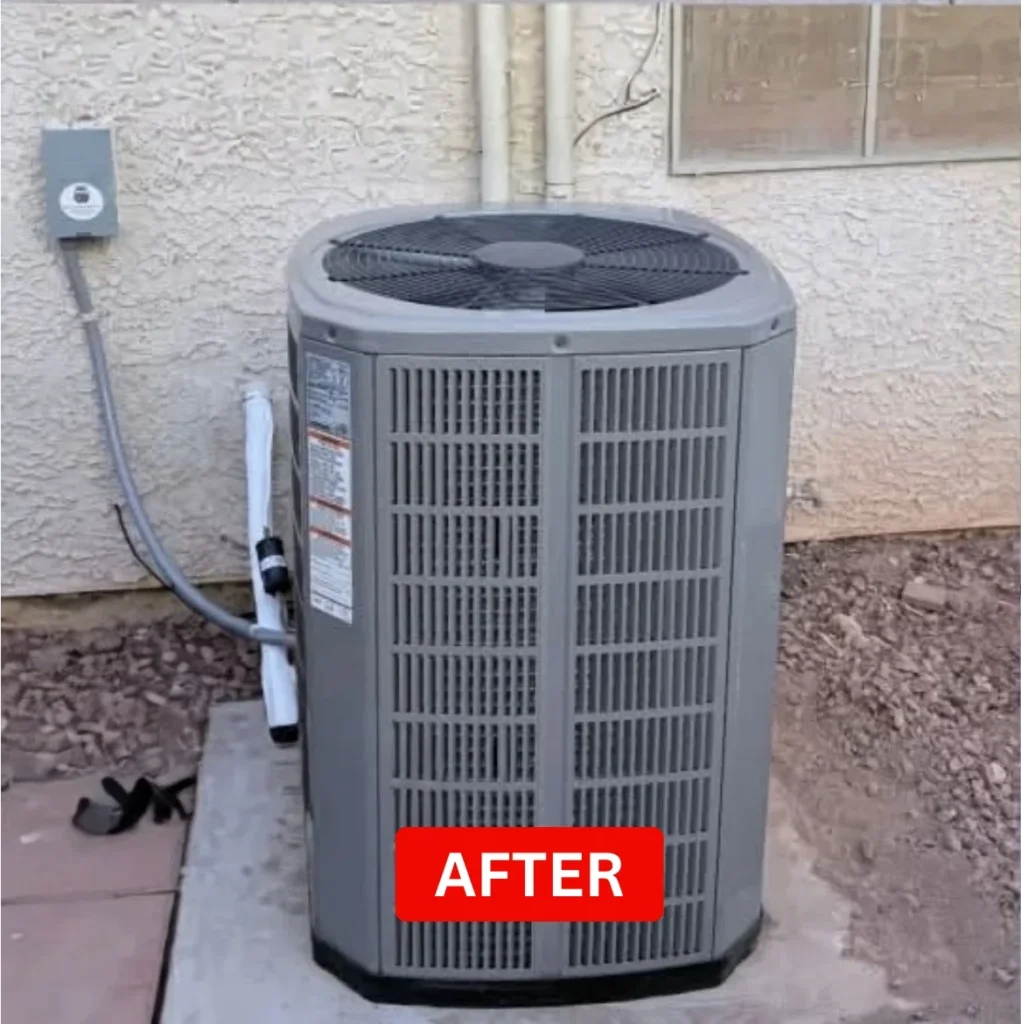
Check the filter every month, keep the outdoor unit clear of debris, avoid big thermostat swings, and act on warning signs early. Those habits matter in Las Vegas, where fine desert dust, wind-blown debris and long stretches of triple-digit days are hard on air conditioners that run for hours at a time. Under that kind of load, small problems can turn into breakdowns quickly.
What should you do before the peak heat arrives?
Start early, ideally in spring. A system that gets a quick check in May is far less likely to surprise you in July.
Filters: check monthly, replace based on how they look
Skip the generic “every three months” rule. Desert dust and heavy summer use can clog a filter much faster, so pull it out once a month and hold it up to a light. If you can’t see light through it, replace it. Check your system’s manual for a compatible MERV rating, because a filter that is too restrictive can cut airflow and strain the system.
Outdoor unit care
- Turn the unit off at the outdoor disconnect and at the breaker.
- Clear leaves, trash and debris from around and on top of the unit.
- Rinse the outside gently with a garden hose. Don’t use a pressure washer, and don’t bend the thin metal fins.
- Check the manufacturer’s clearance guidance, then trim back plants or move anything that crowds the unit.
- Don’t open any panels. Anything inside the cabinet is a job for a technician.
Other pre-summer checks
- Look at the condensate drain line for visible clogs, algae or standing water (a visual check only).
- Make sure supply and return vents aren’t blocked by furniture, rugs or curtains.
- Book a spring AC tune-up in Las Vegas early, since service schedules fill up fast once the heat arrives.
How do you keep your AC running during a Las Vegas heat wave?
During extreme heat, the goal is a steady, reasonable demand on the system. Many households find 74 to 78°F a workable range, though the right setting depends on your home, your equipment and the health needs of the people living there.
- Avoid big thermostat swings. Dropping the setting several degrees at once keeps the system running hard, but it doesn’t cool the house any faster.
- Pre-cool in the morning, then hold the temperature steady through the afternoon.
- Close blinds on west- and south-facing windows. Reflective window film is an optional upgrade.
- Use ceiling fans in occupied rooms, and turn them off when you leave. Fans cool people, not rooms.
- Limit oven, dryer and dishwasher use in the afternoon, since they add heat to the house.
- Worried about the power bill? Check NV Energy’s website for time-of-use plans and see whether one fits your schedule.
What are the warning signs your AC is struggling?
Most failures give some notice first. Pay attention if you notice any of these:
- Weak airflow from the vents
- Warm air when the system is set to cool
- Ice on the refrigerant lines or the indoor coil
- Short cycling, where the system turns on and off in quick bursts
- Water pooling near the indoor or outdoor unit
- Unusual noises or smells
- A breaker that trips again and again
Heat-stressed parts such as capacitors and contactors wear out under constant summer use. A technician can test them; you can’t safely judge them just by looking. If the house simply won’t get cool, our guide to an AC that’s not cooling in Las Vegas walks through the most common causes.
What should you check if the AC stops working?
Run through this list before you call anyone:
- Thermostat: confirm it is set to cool and the set temperature is below the room temperature. Replace the batteries if it uses them.
- Breaker: if it tripped, reset it once. Don’t keep resetting it.
- Filter: a badly clogged filter can restrict airflow enough to cause problems.
- Ice: if you see ice on the coil or lines, turn the system off and let it thaw.
- Water: look for a clogged drain or water around the unit.
If the system won’t start at all, see our checklist for an AC that’s not turning on. While you wait for service, move everyone to the coolest room, drink fluids and check on children, older adults and pets. If anyone shows serious heat symptoms, contact emergency services right away.
Contact Emergency Repair Service Call Now
When is it DIY, and when should you call a pro?
Basic upkeep is fine for most homeowners. Anything involving refrigerant, high-voltage electrical parts or sealed components belongs to a licensed professional. If your system is already showing the warning signs above, a technician who handles AC repair in Las Vegas can find the cause before a minor fault becomes a full failure.
| Safe to DIY | Call a pro |
|---|---|
| Check or replace the filter | Anything involving refrigerant |
| Clear debris from around the outdoor unit | Electrical parts, such as capacitors and contactors |
| Adjust thermostat settings and replace batteries | A frozen coil that comes back after thawing |
| Visually check vents and the drain line | Repeated short cycling or breaker trips |
How to vet an HVAC company in Las Vegas
- Verify the license with the Nevada State Contractors Board before any work begins.
- Ask for a written estimate that explains the diagnosis, the repair and the cost.
- Ask what happens if the problem comes back, including any warranty on parts and labor.
Las Vegas summer AC questions homeowners ask
Is it normal for my AC to run all day in Las Vegas?
On 110°F afternoons, yes. Long run times are expected when it is that hot outside. It becomes a concern when the system runs nonstop but can’t hold your set temperature, when the air from the vents feels warm, or when it turns on and off in short bursts.
How much cooler than outside can my AC keep the house?
Many home systems are sized to hold the inside roughly 20 degrees below the outdoor temperature on the hottest days. On a 115°F afternoon, a house that drifts into the upper 70s or low 80s may be normal for the system, not a sign it is broken. If the gap is much smaller than that, have it checked.
Should I turn the AC off when I leave the house in summer?
In Las Vegas heat, raising the setting a few degrees usually works better than turning the system off. A house that sits without cooling all afternoon soaks up heat, and the system then has to run for hours to bring it back down.
How often should I service my AC in Las Vegas?
At least once a year, ideally in spring before the first heat wave. Because systems here run so many hours, many homeowners also book a fall check before switching to heat.