
LAS VEGAS AC GUIDE
Why Is My AC Leaking Water? Fast Checks Before It Damages the Ceiling
By Robert Wilson, Vegas AC Repair
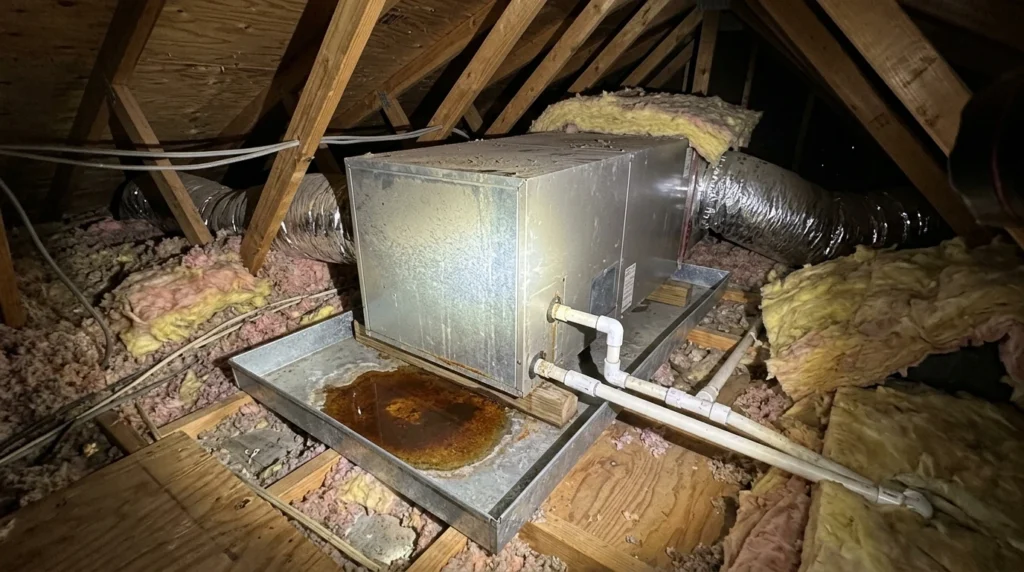
An AC leaks water when the condensate it makes cannot drain away. The most common cause is a clogged drain line. Other causes are a cracked or rusted drain pan, a failed condensate pump, a frozen coil that melts too fast, or a drain line that came loose. Most leaks start small and can be fixed before they stain a ceiling.
Your AC pulls moisture out of the air as it cools. Even in dry Las Vegas, a central system can make several gallons of water on a hot day. That water drips off the indoor coil into a pan, then runs out through a PVC drain line. When any part of that path fails, water ends up where it should not be.
Where Is the Water Coming From?
Find the source before you fix anything. The location tells you a lot about the cause.
Water around the indoor unit
If the air handler is in a closet or garage, look at the floor around it and inside the lower access panel. Standing water in the drain pan almost always means the drain line is clogged.
Water stains on the ceiling
Many Las Vegas homes have the air handler in the attic. A brown ring on a ceiling under the attic unit is the classic sign that the primary drain is clogged and the backup pan is overflowing. Turn the system off right away to limit damage.
Water dripping from a pipe outside
A small PVC pipe dripping near the foundation or over a window is usually the secondary drain. Most systems are set up this way on purpose. Water from that pipe is a warning that the main drain is blocked.
Why Does the Drain Line Clog?
Algae and dust are the main culprits. The drain line stays damp and dark, which is perfect for slime to grow. Dust from the coil adds to the sludge.
Algae growth
In a hot attic, the water in the trap stays warm. Algae grow fast and form a gel that blocks the line. This is the most common clog we see in the valley.
Dust and debris
When filters are dirty or missing, dust passes through and lands on the wet coil. It washes down into the pan and the drain.
Poor slope or sagging lines
A drain line needs a steady downhill slope. Lines that sag between supports collect water and clog sooner.
How Do You Clear a Clogged AC Drain Line?
Many homeowners can clear a simple clog in about 20 minutes. Turn the system off at the thermostat and the breaker before you start.
- Find the drain line where it exits the house. It is usually a white PVC pipe near the outdoor unit or a wall.
- Attach a wet and dry vacuum to the end. Wrap the joint with a rag to make a seal.
- Run the vacuum for 1 to 2 minutes to pull out the clog.
- At the indoor unit, find the access port on the drain line. It is often a T fitting with a cap.
- Pour in a cup of white vinegar and let it sit for 30 minutes.
- Flush with a cup or two of warm water and watch for it to flow outside.
- Dry the drain pan, then turn the system back on.
If water still backs up, the clog may be in the trap or deep in the line. A technician can blow it out with nitrogen or replace the trap.
What Else Causes an AC to Leak?
If the drain is clear and you still see water, look at these.
Cracked or rusted drain pan
Older metal pans rust through. Plastic pans crack with heat. A technician can replace a secondary pan easily. A cracked primary pan inside the coil box takes more work.
Frozen coil
When the coil freezes, the ice melts all at once when the system shuts off. The pan overflows. Low airflow from a dirty filter or a refrigerant leak causes the freeze. See our guide on an AC unit freezing up.
Failed condensate pump
Units in basements, closets or some garages use a small pump to move water out. If the pump fails, water overflows. You can test it by pouring water into the reservoir and listening for the pump to start.
Float switch that did not trip
Many systems have a float switch that shuts the AC off when water backs up. If the switch is missing, stuck or wired wrong, the pan can overflow. A working switch will stop the AC before damage happens, so if your AC shut off and the pan is full, the switch did its job.
| Symptom | Likely cause | What to do |
|---|---|---|
| Water in pan, AC off | Clog tripped float switch | Clear the drain line |
| Ceiling stain under attic unit | Clogged drain, overflowing pan | Turn off AC, clear drain, check pan |
| Water from pipe over a window | Secondary drain working | Clear the main drain soon |
| Leak only after AC shuts off | Frozen coil melting | Check filter, call for refrigerant check |
| Leak with clear drain | Cracked pan or loose fitting | Call a technician |
Can an AC Leak Cause Mold or Damage?
Yes, and that is why a small leak deserves attention. Water in drywall, insulation or subfloor can lead to mold growth and costly repairs. The U.S. Environmental Protection Agency says the key to mold control is moisture control and recommends drying wet materials within 24 to 48 hours.
Attic systems need extra care
An attic leak can soak insulation for days before anyone sees a stain. Look at the secondary pan in the attic a few times each summer, or ask your technician to check it during a tune-up.
Musty smells
A musty smell when the AC starts can point to standing water in the pan or a dirty coil. Our indoor air quality services page explains how that is checked.
How Can You Stop AC Leaks From Coming Back?
Most leaks are preventable with a few minutes of care.
- Pour a cup of white vinegar into the drain access every two to three months during cooling season.
- Change the filter every 30 to 60 days so less dust reaches the coil.
- Make sure a float switch is installed on every attic unit.
- Have the drain line flushed during your yearly tune-up. A good AC maintenance in Las Vegas visit should include it.
A Typical Las Vegas Call: A Brown Ring on the Hallway Ceiling
A two-story home with the air handler in the attic. The primary drain had clogged with algae, the secondary pan filled, and there was no float switch to shut the system off. Water reached the drywall below.
The technician cleared the drain with a vacuum and nitrogen, flushed the trap, installed a float switch and pointed the owner to dry the drywall within 48 hours. The lesson is cheap: every attic system in Las Vegas should have a float switch and a drain flush every season.
Need Help With an AC Leak in Las Vegas?
If water keeps coming back, or you see a ceiling stain, we connect callers with independent providers for AC leaking water in Las Vegas calls across the valley. Ask them to clear the drain, check the pan and float switch, and look for the root cause, with the price first. For a full list of common faults, see our AC problems in Las Vegas page. Condos and short-term rentals near the Strip in Paradise often have closet air handlers where a small leak spreads fast. Ask any Las Vegas AC repair provider to check the drain on every visit.
Frequently Asked Questions
Is it normal for AC lines to sweat?
Light sweating on the larger, insulated copper line is normal, because that line runs cold. In dry Las Vegas air it is usually barely noticeable, more so during monsoon humidity. Heavy dripping, missing insulation or ice on the line is not normal. Ice points to low airflow or low refrigerant, so switch the system off and have it checked.
Is it normal for my AC to drip water outside?
Yes, a little water from the condensate drain outside is normal on hot days. Water dripping from a pipe over a window or door is usually the secondary drain and means the main drain is clogged.
Can I run my AC if it is leaking water?
It is better to turn it off until you find the cause. Running it can overflow the pan and damage ceilings or floors. Clear the drain line first, then restart it.
How do I unclog my AC drain line?
Turn off the AC, attach a wet and dry vacuum to the outside end of the drain line and pull out the clog. Then pour a cup of white vinegar into the indoor access port and flush with water.
How often should I clean my AC drain line?
In Las Vegas, pouring vinegar into the drain line every two to three months in cooling season helps. Have it flushed fully during your yearly tune-up.
Why is my AC leaking water inside the house?
Inside leaks usually come from a clogged drain line, a cracked drain pan, a frozen coil melting or a failed condensate pump. Check the drain first.
Can low refrigerant cause an AC to leak water?
Yes. Low refrigerant can make the coil freeze. When the ice melts, more water hits the pan than it can drain, and it overflows.
How much does it cost to fix a leaking AC in Las Vegas?
Clearing a drain line or replacing a float switch is often a smaller repair. Drain pan replacement and refrigerant leak repair cost more. Ask for a written price before work starts.
Can an AC leak cause mold?
Yes. Water that soaks drywall or insulation can grow mold if it is not dried within a day or two. Fix leaks quickly and dry any wet materials.
Contact Emergency Repair Service
Call now. We connect you with independent local AC service providers anywhere in the Las Vegas valley.
AC & HEATING calls · LAS VEGAS VALLEY
AC Down? Get a Straight Answer Backed by Real Numbers.
Calls answered 24 hours · Independent local AC service providers · No contracts
Call or text
(725) 300-3660, answered 24 hours a day. Same-Day service across the valley.
Where we are
3863 S Valley View Blvd, Las Vegas, NV 89103. Serving the whole valley.